Can You Camp Near Colorado Hot Springs on BLM Land? The 14-Day Rule, the 200-Foot Setback, and Who to Call
Field-verified Colorado hot spring guides written by an outdoor content veteran with 20 years of experience.
- October 22, 2026
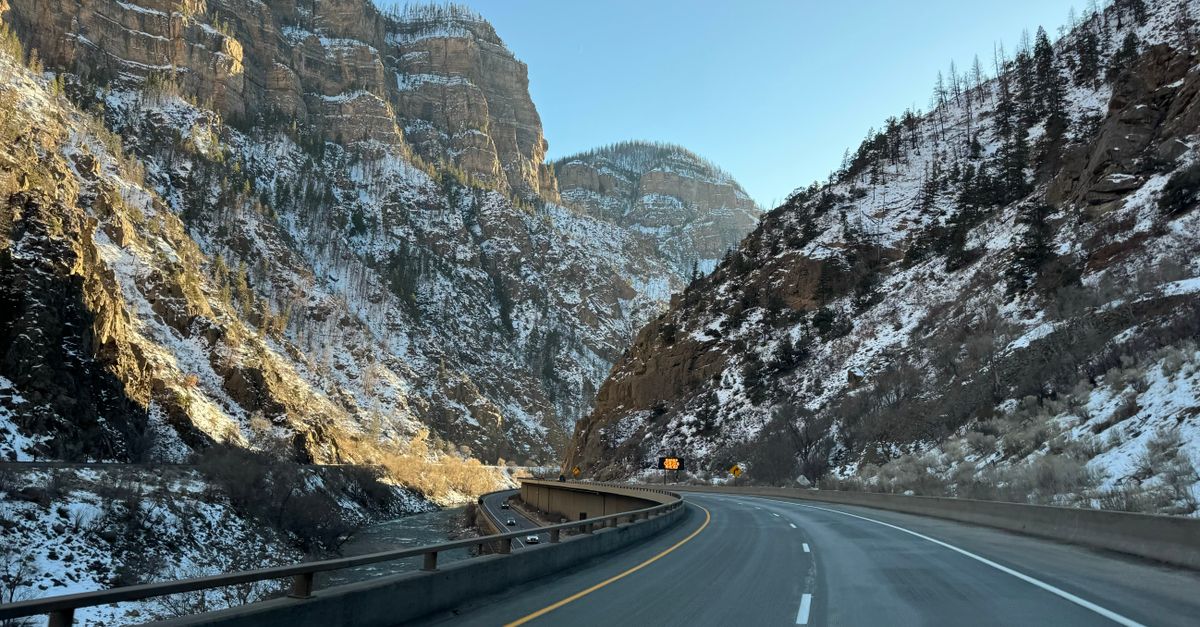
Photo by Alexandre Henry Alves via Pexels
Yes, camping near a hot spring on Bureau of Land Management ground in Colorado is legal, free, and requires no permit at most soaks. The tradeoff comes down to three hard numbers. Campsites are limited to 14 days within any 28-day period. Tents and rigs must sit at least 200 feet from any water source, and hot springs count as water sources. Violations of posted closures or fire restrictions carry federal fines up to $1,000 and up to a year in jail under 43 CFR 8360.0-7. Everything else in this guide flows from those constraints: which springs are on BLM land, how fire stages work, and how BLM rules differ from Forest Service rules. The single most useful habit is calling the local BLM field office before you go, because fire restrictions and camping closures in Colorado change month to month and sometimes week to week.
The hot springs that sit on BLM land
Two soaks anchor the BLM map in Colorado. Radium Hot Springs sits on a bench above the Colorado River roughly 20 miles south of Kremmling, inside the Kremmling Field Office's territory. A user-built rock pool captures the thermal outflow where it seeps toward the river, and you reach the soak by hiking about a mile from the nearest parking at the Radium access along Trough Road. Deep Creek Hot Springs lies at the bottom of a canyon between the Roaring Fork and Colorado River valleys, a couple of steep canyon miles from the nearest trailhead. Its rock-lined pools are managed by the Colorado River Valley Field Office, which operates out of Silt. Deep Creek itself has been studied for Wild and Scenic River status, which tells you how little development you'll find down there. A third soak, Penny Hot Springs along the Crystal River at Highway 133 south of Carbondale, is a roadside pullout of user-dug riverside pools frequently grouped with BLM sites. Confirm its current status and camping rules with the Colorado River Valley Field Office before treating it as one.
Just as important is knowing what isn't BLM. Conundrum, Rainbow, and the Piedra River springs sit on national forest, which is U.S. Forest Service ground. Strawberry Park, Mount Princeton, Dakota, Orvis, and Valley View are private. On BLM land, both soaking and camping are free. On a January afternoon at Radium I shared the rock pool with nobody but steam, which rolled off the Colorado River in sheets while bighorn sheep watched from the basalt across the water, the kind of hour that makes the drive and the cold worth protecting.
The 14-day rule and the 200-foot setback
What "14 days" actually means
BLM Colorado limits dispersed camping at any one site to 14 days within a rolling 28-day period, under federal occupancy regulations (43 CFR Part 8365) and local supplementary rules. In practice the limit is a ceiling on residence rather than a grant of two free weeks. After day 14 you must fully vacate, and most field offices expect a genuine relocation, often interpreted as 25 miles or more, rather than a quarter-mile shuffle to the next pullout on the same bench. Many offices also treat a drainage or road corridor as one site, so sliding your rig 300 yards downstream does not restart the clock. The rule exists to prevent full-time living disguised as recreation, and rangers in high-traffic corridors like the Upper Colorado River do enforce it. Campsites must also be left clean, property can't be left unattended to hold a spot, and resource damage (trampled vegetation, cut firewood, trenching around tents) can end a stay early regardless of the calendar.
Why your tent can't sit next to the spring
The second number is the one soakers most often fumble. Most BLM land in Colorado requires dispersed camps at least 200 feet from any water source: streams, lakes, rivers, and natural springs, hot springs included. That's roughly 70 adult paces, and it applies even when the gravel bar beside the pool looks like the perfect tent pad. The reasoning is practical: riparian vegetation, water quality, and wildlife access all degrade when every camper claims the riverbank, and heavily compacted ground around thermal features recovers slowly. The setback also draws a clean line between your kitchen and your soak, because food waste and soap near a pool are exactly what gets places closed. Camp on the bench or up the slope; walk down to soak. Human waste follows the same 200-foot rule, buried in a cathole 6 to 8 inches deep with toilet paper packed out. In busy corridors like the Upper Colorado, packing waste out entirely is the better call.
Leave No Trace at hot springs specifically
The standard Leave No Trace principles (lnt.org) apply on BLM land, but hot springs add complications that most campsites don't have. Start with soap: none, ever, in the pools, not even biodegradable products. Thermal pools at undeveloped springs drain directly into creeks or into the ground with no filtration, and the mineral formations and microbial mats that make these places distinctive are damaged by soaps, oils, and sunscreen. Shower off before you get in, or skip the lotion. Glass is a hard no anywhere near a soak; most soakers are barefoot, and broken glass in a rock pool doesn't get found until someone finds it. If you bring a dog, keep it out of the pools and pack its waste out. Dog waste and human waste are the two most commonly cited drivers of closures at Colorado's wild springs. Trash rules are simple and absolute: pack out everything you brought, including orange peels, cigarette butts, and micro-trash, because none of it decomposes on a reasonable human timeline in Colorado's dry climate. Don't dig new pools or dam seeps at undeveloped spots; altering a thermal outflow can damage the feature itself and concentrate impact in fragile ground. If a pool has gone cold or silted in, leave it alone rather than rebuilding. The user-maintained pools at places like Radium are part of the culture, but restraint is what keeps them open.
Fire restrictions and posted closures
Reading the fire stages
Colorado fire restrictions follow a staged system, and the stages mean specific things. Under Stage 1, campfires are allowed only in permanently constructed metal fire rings at developed recreation sites; smoking is restricted to enclosed vehicles or cleared areas; and fireworks are prohibited (they're illegal year-round on BLM land regardless of stage). Under Stage 2, all open flames are banned, including fires in established rings, and prohibitions extend to anything that throws a spark: chainsaws, welding, sometimes generators and off-road driving. Beyond Stage 2 sits full area closure. Violating a posted restriction is a federal offense carrying fines up to $1,000 and up to 12 months in jail, and if your fire escapes, you can be billed for suppression costs that run into the millions. Check status before every trip through the field office's page on blm.gov, through InciWeb (inciweb.nwcg.gov) for active incidents, and through the county sheriff, whose county-level burn bans can be stricter than the federal order.
When a site is posted "closed to camping"
Obey the sign, even if it seems to apply only to overnight use. Closures at hot springs almost always follow resource damage, accumulating human waste, or wildlife conflicts, and day-use access frequently remains open. You can soak; you just can't sleep there. Overnight parking at nearby trailheads and pullouts is often included in the closure, so read the order rather than assuming. The fines are real, and a campsite that gets trashed becomes the justification for the next closure. The right move is a call to the field office: ask what the closure boundary is, whether there's a reopening timeline, and where the nearest legal dispersed camping or developed campground sits. Rangers would much rather point you to an open bench than write a ticket.
How BLM rules differ from Forest Service rules
Both agencies manage multiple-use federal land, but BLM sits in the Department of the Interior and the Forest Service sits in the Department of Agriculture, and the practical differences matter at hot springs. Stay limits are set forest by forest rather than state by state, and while 14 days is common, it's not universal, so check the specific forest. Wilderness rules on forest land are stricter: group-size caps, leash requirements, and permits. Conundrum Hot Springs, on Forest Service land near Aspen, now requires overnight permits in peak season through recreation.gov, precisely because demand was crushing the basin. Motorized access differs too. Forest camping off roads is governed by Motor Vehicle Use Maps, while BLM dispersed camping generally allows parking within about one vehicle length of a road where not posted otherwise. Fire restrictions are issued separately by each agency and by each county, so a ban on one jurisdiction's land says nothing about the other. Before you camp, know whose surface you're standing on. Free BLM land-status data lives on blm.gov, and forest maps are available through the Forest Service.
Who to call before you soak
For Radium and the Upper Colorado River corridor, that's the Kremmling Field Office. For Deep Creek and the Crystal River vicinity, it's the Colorado River Valley Field Office in Silt. Both offices maintain pages on blm.gov with current conditions, closure orders, and fire restriction announcements, and their phone numbers are listed there. Call on a weekday and ask three questions: Are fire restrictions in effect? Are there camping closures near the springs? What shape are the roads and trails in? Cell service near both soaks is thin to nonexistent, so download or screenshot the relevant orders and maps before you lose signal. Ten minutes on the phone with a receptionist in Kremmling or Silt is the difference between a legal, free night beside a steaming river and a ticket in a closed pullout.