Colorado vs. Utah Hot Springs: An Honest Comparison of Heat, Access, Scenery, and Cost
Field-verified Colorado hot spring guides written by an outdoor content veteran with 20 years of experience.
- November 4, 2026
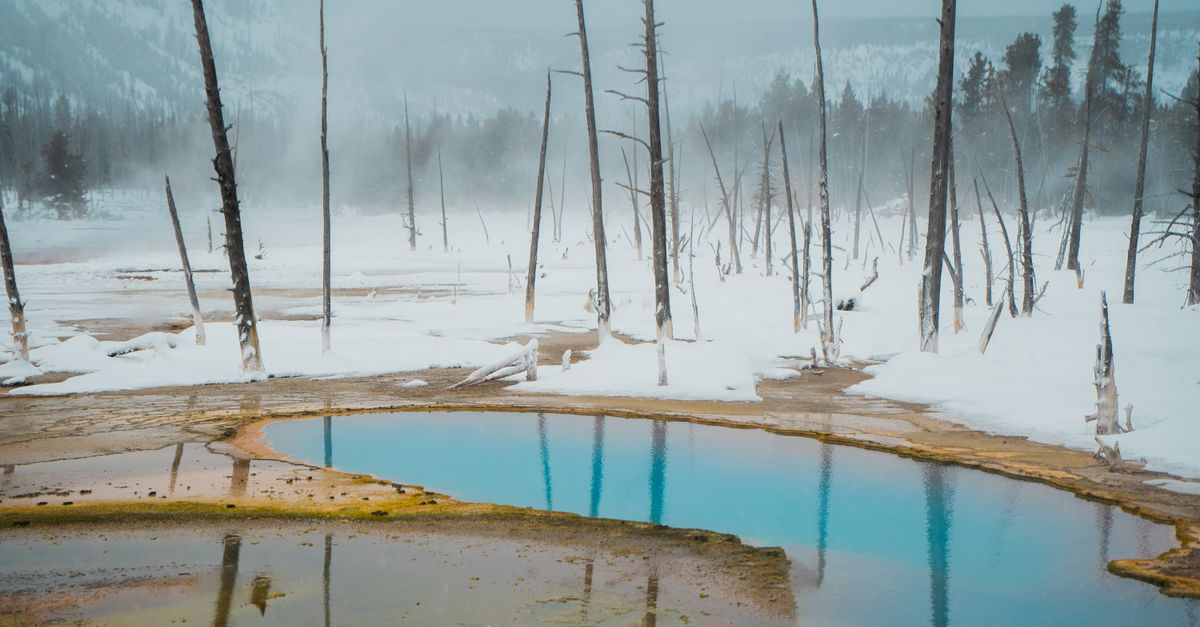
Photo by Meghan Marron via Pexels
Colorado wins on heat, infrastructure, and year-round reliability. Utah wins on cost, solitude, and the sheer strangeness of its landscape. Colorado fields roughly 30 commercial hot springs operations anchored to mountain towns with airports within driving distance; Utah counters with barely a dozen developed soaks scattered across a state that mostly refuses to build anything next to its geothermal water. The record holders tell the story. Pagosa Springs holds the Guinness World Record for the deepest geothermal hot spring, the Mother Spring, measured at 1,002 feet in 2011, while Utah's marquee soak, the Homestead Crater in Midway, is a 10,000-year-old limestone dome you enter through a tunnel. If you want guaranteed 104-degree water in a January blizzard, pick Colorado. If you want to soak alone under desert stars for zero dollars, pick Utah. You can dig deeper with our Colorado hot springs guide and our Utah hot springs coverage.
Temperature: Colorado runs hotter
Colorado's developed soaking pools typically hold between 100 and 112 degrees, and the source water runs far hotter. The Yampah spring feeding Glenwood Hot Springs Resort emerges around 122 degrees and fills what the resort bills as the world's largest hot springs pool: more than a million gallons across two city blocks, kept in the low 90s, with a separate therapy pool pushed past 100. Pagosa's Mother Spring surfaces at roughly 140 degrees before The Springs Resort blends it down across two dozen terraced pools. That heat comes from water that percolates thousands of feet down along faults in the Rockies and the Rio Grande Rift, warms as it descends, and rises fast enough to arrive scalding.
Utah's public water, by contrast, runs cooler on average. The Homestead Crater sits at a bath-warm 90 to 96 degrees: pleasant and swimmable, deep enough that dive instructors certify scuba students in it, but never hot in the way a Colorado winter soak demands. The free springs follow the same pattern. Meadow Hot Springs near Fillmore hovers in the low-to-mid 90s, and Fifth Water Hot Springs in Diamond Fork Canyon lands around 100 at its best pools. Crystal Hot Springs in Honeyville is the exception, with a hot pool in the mid-100s fed by a spring the resort claims has some of the highest mineral concentrations of any hot spring on earth. The quiet irony of Utah geothermal is that the state's hottest water never reaches a tub. Roosevelt Hot Springs near Milford, far hotter than anything soakable, has been piped to the Blundell geothermal power plant since 1984.
If heat itself is the therapy you're after, Colorado's water is measurably hotter where it counts. One January night at Strawberry Park outside Steamboat Springs made it permanent for me. The pool held a steam-shrouded 104 while snow stacked on my bare shoulders and melted the instant it touched water, a heat index Utah's best free springs simply don't reach in winter.
Access: Resorts versus dirt roads
Colorado built the drive-up soak
Colorado's soaking culture is built around mountain towns. Glenwood sits directly on I-70, under three hours from Denver. Chaffee County packs Mount Princeton, Cottonwood, and Salida into a single valley drive. Pagosa, Ouray, and Steamboat all anchor their towns' winter economies to hot water, which means plowed roads, paid staff, changing rooms, and water that's the same temperature on Christmas as on the Fourth of July. The wild outliers demand real effort: Conundrum Hot Springs outside Aspen, often called the highest hot spring in the country, requires an 8.5-mile hike to 11,200 feet, and the Forest Service now manages crowding through a recreation.gov permit system. But Conundrum is the exception. Colorado's default is the roadside or in-town soak, from Penny Hot Springs' free riverside pocket on the Crystal River to full spa resorts.
Utah hides its water
Utah's access model is almost inverted. The Homestead Crater is genuinely easy (park, walk in, soak in a reserved time slot), and Crystal Hot Springs sits just off I-15 near Brigham City. But the soaks people cross state lines for are the free ones, and they demand work. Fifth Water requires about 2.5 miles of hiking each way through Diamond Fork Canyon, with trailhead parking that fills by mid-morning on summer weekends. Meadow Hot Springs sits at the end of a dirt road through cow pasture on privately owned land that the owners leave open to the public at no charge. Baker Hot Springs, the best soaking option near Capitol Reef, rewards high clearance and punishes low. Seasonal hazards split along regional lines. Utah's dirt roads turn to impassable gumbo after rain, while Colorado's high passes like Cottonwood and Independence close from roughly November through May. Colorado's difficulty is snowpack; Utah's is road surface and remoteness. One cultural note worth planning around: Colorado offers established clothing-optional soaking (Orvis Hot Springs in Ridgway is fully optional; Strawberry Park after dark), while Utah's public soaks are firmly family-first, swimwear required.
Scenery: Alpine theater versus basin-and-range silence
Colorado's backdrops are vertical. Mount Princeton's creekside pools put you in the Chalk Creek shallows with the Collegiate Peaks stacked above the canyon mouth. Ouray's pool sits inside a literal amphitheater of 13,000-foot walls. Strawberry Park disappears into aspen and spruce. The scenery formula is mountain greenery plus steam plus, half the year, snow. The contrast is so reliable it borders on guaranteed.
Utah's scenery is horizontal and alien. Fifth Water's pools glow an unnatural mineral blue-green inside a red-tinted canyon below a waterfall. Meadow sits under an enormous empty sky where the landscape does the decorating: no peaks, just distance. Baker looks toward Capitol Reef's Waterpocket Fold, and even the Homestead Crater, ringed by the mild green of Heber Valley, wins on weirdness. You are, after all, soaking inside a geology lesson. Crowds follow suit. Colorado's marquee springs share resort-town traffic, and Glenwood's pool can hold hundreds on a ski weekend. Utah's walk-in and drive-out springs, in a state with a fraction of the soaking tourism, hand you genuine solitude on weekdays well into October.
Costs: What you'll actually spend
Colorado's developed soaks run roughly $20 to $45 per adult day pass. Glenwood lands in the low $30s, Mount Princeton similar, Pagosa's full resort access higher. The real cost multiplier is lodging: hot springs towns in Colorado are ski towns, and a winter weekend room runs $150 to well past $300 a night. A three-day Colorado soaking trip built around developed springs routinely clears $500 per person before gas.
Utah's math is different. Crystal charges around $15. The Homestead Crater's reserved slots price like a swim rental, not a spa day. Mystic Hot Springs in Monroe (clawfoot tubs filled with hot mineral water beside soaking ponds, part venue, part fever dream) stays under $20. And the springs most Utah soakers rank highest cost nothing: Meadow, Fifth Water, and Baker are all free, no permit, no attendant. Pair them with public-land camping and a Utah soaking weekend can come in under $100 total. The trade is certainty: free springs carry no guarantee of temperature, cleanliness, or that the tub-sized pool at the end of the trail isn't already occupied.
The Verdict: Choose by heat tolerance and tolerance for uncertainty
Choose Colorado when heat is non-negotiable and the trip is winter: its water is hotter, its pools are staffed and temperature-controlled year-round, and its infrastructure swallows bad weather. Choose Utah when the trip is spring or fall. Desert soaks are punishing at midday in July and perfect in March, while Colorado's high wild springs like Conundrum are only realistically reachable July through October. Pick Utah, too, when the budget is thin and the goal is landscape over luxury. The two states have divided the soaking world between them. Colorado sells certainty at altitude. Utah sells the opposite, water you have to walk to, in country that looks like another planet, and charges you nothing for it.