Hot Springs Photography Tips: Capturing Colorado's Steam, Stone, and Starlight
Field-verified Colorado hot spring guides written by an outdoor content veteran with 20 years of experience.
- November 8, 2026
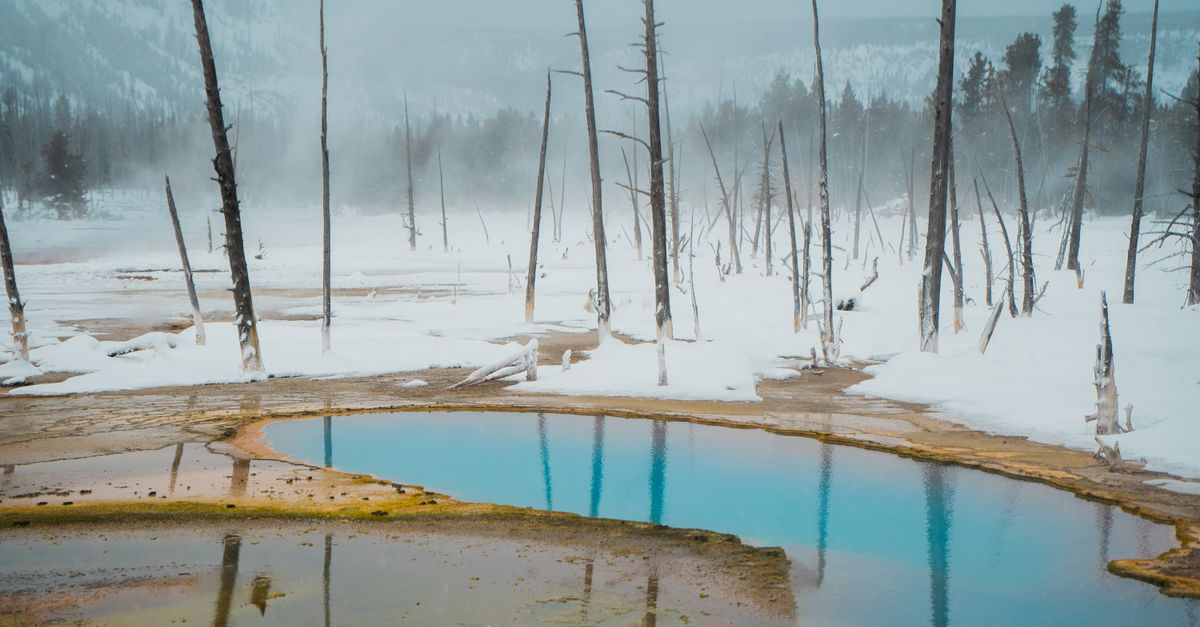
Photo by Meghan Marron via Pexels
Hot springs photography comes down to a few conditions: water warm enough to steam, air cold enough to reveal it, and light low enough behind the plume to make it glow. Everything else is technique, and technique is learnable in an afternoon. Colorado's soaking pools typically run between 100 and 115 degrees Fahrenheit, so from November through early April, any calm morning with air below roughly 20 degrees produces a visible plume. Time your visit to those mornings, put the sun behind the steam, and protect your gear from fog and cold. That's eighty percent of the job. The rest is choosing the right spring.
When to shoot
Steam season: the colder, the better
Steam is basic physics. Hot water evaporates, and when that vapor hits air cool enough to condense it, you get a visible plume; the wider the gap between water and air temperature, the thicker the column. A January dawn at zero degrees over a 104-degree pool gives you more than a hundred degrees of differential and steam that reads like smoke. Calm air matters as much as cold, since even a light breeze shreds a plume before it can climb. Last January I stood along the Crystal River at Penny Hot Springs in minus-two-degree air, frustrated that a heavy plume was rendering as flat gray nothing. Then the sun crested the ridge, lit the steam from behind, and turned the whole column pink in about ninety seconds. The steam hadn't changed; the light had. Get into position before sunrise and wait.
Golden hour and blue hour
The first hour after sunrise and the last before sunset give you long shadows across snow and warm light that plays against the cyan and green tones of mineral water. Blue hour, the twenty to forty minutes after sunset, is the sleeper window: ambient light and steam find a balance, and lit pools like the Glenwood Hot Springs Pool glow like something staged. Midday has exactly one use, and it's important: high sun penetrates the water and reveals its true color. Glenwood's famous aquamarine, the product of dissolved minerals in the Yampah spring's 122-degree water, looks washed out at dawn and electric at noon.
After dark
Night is when Colorado separates itself from every other soaking state. The San Luis Valley holds some of the darkest readily accessible sky in the country. Great Sand Dunes National Park earned International Dark Sky Park certification in 2019, and Valley View Hot Springs sits under comparable darkness on the valley's edge. The Milky Way core is visible roughly April through October. Steam lit by starlight takes a tripod, a wide-open lens, and shutter speeds of ten to twenty seconds, but a steam column under the galactic core is the most dramatic image the state offers.
Where to stand
Backlight, sidelight, and getting low
Front light is the killer. Shoot with the sun at your back and steam essentially disappears, because you're looking at the shadow side of millions of water droplets. Put the sun low and behind the plume instead, and each droplet scatters light toward your lens. The column lights up, rim-lit against a dark ridge or a deep-blue sky. Sidelight is the second-best option: it rakes across snow and stone for texture and shows steam in relief. Get the camera down near water level, too. Reflections double the color in the frame, and low-lying steam drifts across the lens as a soft foreground layer. A tripod that drops to within a foot of the water is worth more here than any filter you can screw on.
Scale, detail, and the drone question
Wide shots of steam and mountains establish the scene, but the frames that feel like the place are close ones: mineral terraces crusted with travertine, icicles hanging off poolside rock walls, water beading on cold stone. A human silhouette (always with consent) gives scale that the landscape alone can't. On drones, fly legally. You need a Part 107 certificate if you're shooting commercially, and designated wilderness prohibits motorized equipment entirely, which rules out flights at Conundrum and most hike-in basins. Resorts and clothing-optional springs generally prohibit them too, and the etiquette is simple: people in swimsuits, or less, did not consent to be filmed from above. Between the rules and the etiquette, there aren't many springs where a drone is worth carrying.
Equipment that survives steam and cold
The core kit
Weather sealing comes first, because steam is water. A sealed body and lens, a standard zoom in the 24-70mm range, and a sturdy tripod cover the essentials. Add a circular polarizer, which cuts surface glare and shows you the water's actual color instead of the sky's reflection. Rotate it while watching the surface and the effect is immediate. A neutral density filter earns its place at creekside springs like Mount Princeton Hot Springs, where hot water meets the cold current of Chalk Creek and long exposures turn the mix into silk.
Fog, condensation, and batteries
Fog is the problem you don't see coming. Warm glass meeting cold, humid air fogs up instantly, so let gear acclimate outside for fifteen to twenty minutes before you expect to shoot, and never breathe on the viewfinder. Carry more microfiber cloths than seems reasonable, and seal the camera in a zip bag before walking into a warm car or lodge, because condensation forms on the way in, not on the way out. Cold also guts batteries: lithium-ion cells can lose a third or more of their capacity near zero, so keep spares in an inside pocket against your body and rotate them. Phone shooters aren't exempt. Tap and hold to lock exposure, drag it down to protect highlights in the steam, use night mode for blue hour, and pack a microfiber, because fogged phone lenses fail first.
Springs that hand you the frame
Winter steam and big terrain
Start with Penny Hot Springs, the free roadside pools on the Crystal River, where 12,965-foot Mount Sopris fills the frame behind the plume. Strawberry Park Hot Springs outside Steamboat Springs layers stone pools, waterfalls, and snow-bent aspens into one composition, though the pools go clothing optional after dark. Shoot the landscape, never the soakers. Mount Princeton puts you in hand-built rock pools where hot spring water and creek water mix, so you get steam, ice, and moving water in a single frame.
Architecture, dark skies, and the expedition shot
For scale, the Glenwood Hot Springs Pool, more than a million gallons in a basin longer than a football field, shoots best at midday for color and at blue hour for its lit, historic lodge setting. Dunton Hot Springs is a restored nineteenth-century mining ghost town of hand-hewn cabins and fireside exteriors that photographs like a film set. For night work, Valley View Hot Springs sits under San Luis Valley dark skies and adds a dusk bonus in summer, when roughly a quarter-million Brazilian free-tailed bats pour out of the old Orient Mine across the sky. And for the expedition image, Conundrum Hot Springs demands an 8.5-mile hike to 11,200 feet, with an overnight permit system capping the crowd. What you get is a Milky Way core over a steaming pool in a high basin, and a photograph you worked for.
One last thing worth more than any lens: ask before anyone appears in your frame, leave rock pools as you found them, pack out everything, and think twice before geotagging fragile places. The springs were here first, and the good shots keep coming only if they stay that way.