Is It Safe to Soak in Colorado Hot Springs? A Medical Guide to Naegleria, Heat, and Altitude
Field-verified Colorado hot spring guides written by an outdoor content veteran with 20 years of experience.
- November 1, 2026
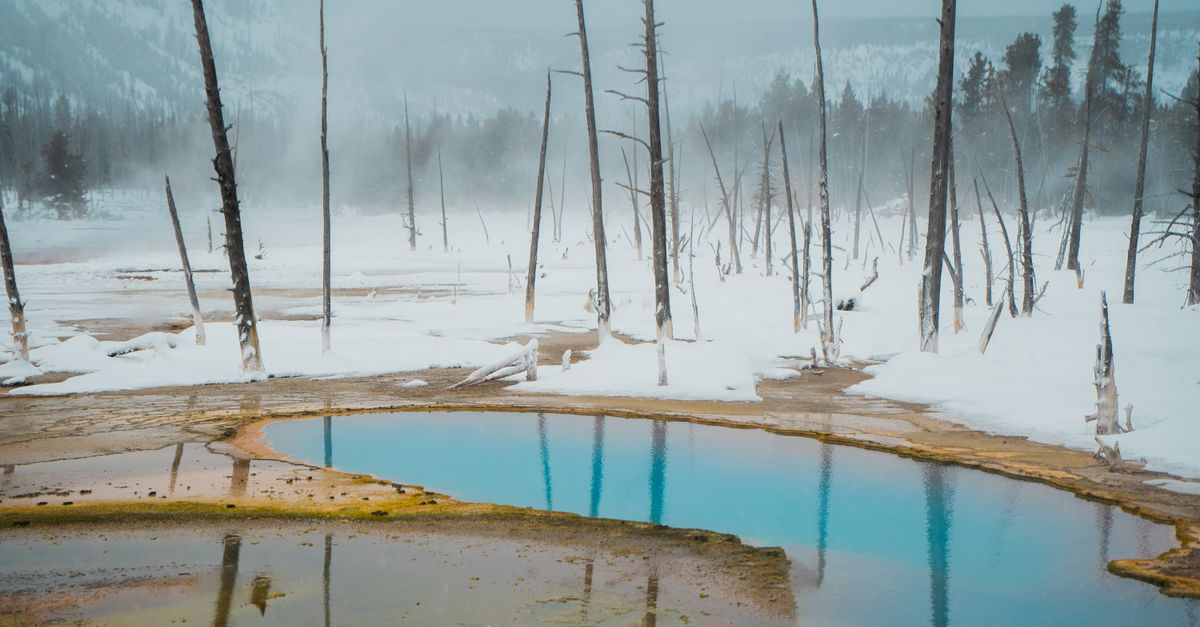
Photo by Meghan Marron via Pexels
For most healthy adults, soaking in a Colorado hot spring is safe, and the medical guidance on keeping it that way is unusually clear: keep your head above water, cap your time in the heat, and rehydrate afterward like you mean it. The U.S. Centers for Disease Control and Prevention (CDC) flags exactly one organism worth knowing by name, Naegleria fowleri, and exactly one behavior that invites it: forcing warm water up your nose. The Mayo Clinic's concerns run toward thermoregulation. Pregnancy, cardiovascular conditions, blood-pressure medications, and alcohol all change how your body handles 104-degree water. Colorado adds a variable of its own, because many of the state's best soaks sit between 7,000 and 9,000 feet, where the physiology of heat illness shifts against you.
Colorado is also one of the few states that regulates mineral bathing directly: the Colorado Department of Public Health and Environment (CDPHE) enforces sanitation and water-quality standards for public pools and mineral baths under state regulation 5 CCR 1003-5. That matters for the amoeba question below.
Naegleria fowleri: the risk you can eliminate in one move
Naegleria fowleri is a single-celled amoeba that lives in warm freshwater and soil and feeds on bacteria in the sediment. The CDC notes it multiplies fastest at high temperatures, up to 115°F, which is why thermally heated water and slow-moving geothermal features appear on its list of habitats. If it reaches the brain, it causes primary amebic meningoencephalitis, or PAM, and PAM is about as close to uniformly fatal as infectious disease gets: of roughly 160 known U.S. infections since 1962, only a handful of people have survived. Symptoms typically begin one to nine days after exposure, and the disease usually kills within about five days of onset.
What matters at a hot spring is simpler: the amoeba has exactly one route into your body, and it's your nose. Drinking contaminated water cannot infect you, and neither can skin contact. Infection requires water driven deep into the nasal passages, where the organism travels along the olfactory nerve into the skull. That is why the CDC's prevention guidance comes down to behavior: keep your head above water in warm freshwater, use nose clips or pinch your nose if you go under, keep small children from dunking, and avoid digging in or stirring up sediment, where the amoeba concentrates to feed. Properly chlorinated water kills it outright, which the CDC notes is why maintained pools are not a vector.
The actual risk level in Colorado
Colorado's realistic exposure risk is low, and it is worth being precise about why. The overwhelming majority of documented U.S. cases have come from swimming in warm lakes and rivers in southern states during summer heat, and cases linked to geothermal water anywhere in the country number only a handful across six decades. Colorado's commercial soaks operate under CDPHE mineral-bath regulation, with treated, tested, or continuously flowing water, and there is no record of a PAM case tied to the state's regulated springs. The state's wild, untreated backcountry springs are a different question, since warm, still, sediment-bottomed water is the organism's preferred real estate, but the same single rule closes that door. The risk isn't really the water; it's the dunk.
Why 104°F hits harder at 9,000 feet
The near-universal commercial standard caps hot pools at 104°F, and the cap exists because immersion at that temperature raises your core body temperature. Studies of hot-water immersion show core temperature climbing a degree or two over a sustained soak. Your body has exactly one response: the blood vessels near your skin dilate to dump heat outward, and your heart rate rises to keep that shunted blood moving. Your cardiovascular system, in effect, gets drafted into a heat-dumping protocol.
Now run that protocol at altitude. At 9,000 feet, barometric pressure is roughly 30 percent lower than at sea level, so every breath delivers significantly less oxygen, and unacclimatized visitors commonly post oxygen saturations in the high 80s or low 90s. Acclimatization compounds the problem: your first days at elevation trigger altitude diuresis (increased urination that shrinks plasma volume), while dry mountain air pulls moisture out of you with every breath. You arrive at the pool marginally short on both oxygen and fluid, then ask your heart and vessels to handle a heat load. The margin between pleasantly cooked and heat exhaustion narrows accordingly, which is why the classic Colorado presentation isn't collapse in the water. It's a wobble on the pool steps on the way out.
The signs you are overheating
Learn these before you get in, because heat dulls your own judgment. Early warning signs include dizziness, a pounding or racing pulse, nausea, headache, weakness, and lightheadedness when you stand. The water feels good the whole time; the symptoms show up on exit. Confusion, slurred speech, or staggering are red flags for heat stroke. If you or a soaking partner shows them, get out, get cool, and seek medical attention. Heat stroke is an emergency, not something to sleep off in the car.
How long to soak: the numbers that matter
For hot pools, plan on 30 to 45 minutes per session, broken up with cool-down breaks out of the water every 10 to 15 minutes, or a rotation through a cooler pool if the facility has one. For vapor caves, the ceiling is lower: 15 to 20 minutes maximum per session, because steam-filled air runs hotter than pool water and you are breathing it directly. The Yampah Vapor Caves in Glenwood Springs, the state's best-known example, sit underground at around 110 degrees of mineral steam, and the attendants still time new arrivals and wave them out before they think they need to go. Regulars reliably overstay, because the heat quietly steals their self-assessment. Children and older adults should keep sessions shorter than adults in their prime, and alcohol distorts both your sense of time and your ability to register the warning signs listed above. Treat these numbers as ceilings, not targets. No one regrets a 25-minute soak; plenty regret the second hour.
Who should check with a doctor before soaking
Pregnancy tops the Mayo Clinic's caution list. Mayo guidance advises pregnant women to avoid hot tubs, especially during the first trimester, because the concern is maternal hyperthermia: research associates core temperatures of roughly 101°F or above in early pregnancy with an increased risk of neural tube defects, and a hot soak can push core temperature in that direction. Later in pregnancy the calculus changes somewhat, but that conversation belongs with your obstetrician, not with a blog.
Cardiovascular conditions come next. The American Heart Association has long cautioned heart patients about hot tubs, because widespread vasodilation drops blood pressure: that can mean lightheadedness, and it can mean fainting on a wet stone deck. People with arrhythmias, heart failure, or recent cardiac events should get physician clearance first. Hypertension deserves its own line, because the medications that treat it actively interfere with heat tolerance. Beta-blockers blunt the heart's ability to compensate for heat stress, diuretics both impair thermoregulation and drain the fluid volume you need for sweating, and calcium channel blockers compound the blood-pressure drop. If you take any of these, ask your prescriber specifically about hot-water immersion before you travel. And alcohol, a fixture of resort culture, impairs thermoregulation and judgment precisely when heat and altitude are already compromising both. The Mayo Clinic's advice on combining the two is unambiguous: don't.
The after-soak problem: dehydration at altitude
You sweat in a hot spring; you just cannot tell. The water rinses it away, the dry mountain air evaporates the rest, and the warmth suppresses the usual cues. Stack that on top of altitude diuresis and low-humidity respiratory loss, and you can walk away from a 40-minute soak meaningfully dehydrated. The telltale aftermath is a headache, which soakers routinely misdiagnose as altitude sickness when it is often both, plus dark urine, fatigue, and dizziness on the drive out.
The fix is simple and unglamorous. Drink water steadily after you get out, and add electrolytes: plain water alone does not replace what you lost through sweat. If the soak is part of a trip that includes a beer afterward, alternate every drink with a full glass of water, because alcohol stacks its own dehydration and vasodilation onto a deficit you already have. Hydrate before you feel thirsty. At elevation, thirst arrives late, and the headache arrives later still.
Colorado's springs are safe the way the state's mountains are safe: entirely on your own terms. Keep your head above warm water, respect the clock, know your medications, and drink more than you think you need. Do that, and the water does what it is famous for doing, which is nothing more complicated than slowing you down.